Tag: School Leadership & Self-Reflection
School Leadership – Leading with Clarity and Compassion
School leadership involves much more than managing schedules, structures and administrative responsibilities. School leaders shape the culture of their schools, influence relationships and create the conditions in which teachers and students can thrive.
Leading a school means supporting people, making important decisions and responding to high expectations, time pressure and emotional challenges.
Effective school leadership requires professional knowledge, but it also depends on inner clarity, emotional awareness and the ability to reflect on personal attitudes and behaviour.
The better you understand yourself, the more consciously you can lead others.
Why Self-Reflection Matters in School Leadership
Self-reflection is an essential part of developing effective and compassionate leadership.
School leaders who recognise their own expectations, emotional triggers and habitual reactions can make more thoughtful decisions and communicate with greater confidence.
Personal development and emotional resilience help leaders remain grounded when navigating difficult conversations, organisational change or conflicting expectations.
Reflective leadership is not about avoiding difficult decisions. It is about combining clarity and responsibility with empathy and respect.
Challenges School Leaders Face Every Day
School principals and leadership teams regularly encounter situations that require emotional stability, professional judgement and effective communication.
Consider these reflection questions:
- How can I make clear decisions while remaining compassionate?
- How do I respond constructively to conflicts within the teaching team?
- How can I maintain inner calm during periods of intense pressure?
- What kind of leadership approach builds trust and mutual respect?
- How do my personal expectations influence the way I lead?
Reflecting on these questions can help school leaders recognise their strengths, identify unhelpful patterns and develop more conscious ways of responding to challenges.
Building Trust Through Clear and Compassionate Leadership
Strong school leadership is built on relationships, communication and shared responsibility.
Leaders who communicate clearly, listen actively and approach conflicts with emotional awareness can contribute to a healthier school culture.
Trust grows when teachers feel respected, expectations are communicated transparently and difficult situations are handled fairly.
At the same time, effective leaders need to establish healthy boundaries, manage their own resources and remain open to personal development.
School Leadership and Personal Development in My Ego is on Holiday
The book My Ego is on Holiday explores how inner drivers, personal expectations and familiar behaviour patterns can influence our decisions and relationships.
Through five fictional personality characters, the book encourages readers to recognise recurring reactions and reflect on how these patterns may affect their leadership.
It combines psychological perspectives with practical reflection exercises that can help school leaders respond more consciously to pressure, responsibility and interpersonal challenges.
The aim is to develop a leadership style that combines confidence and clarity with empathy, authenticity and emotional balance.
Explore Articles About School Leadership
Under this tag, you will find articles and practical insights about:
- Leadership attitudes and values in schools
- Self-reflection as a foundation for effective decisions
- Clear communication with teachers and school teams
- Managing conflicts and resistance constructively
- Emotional awareness and resilience in leadership
- Personal development for school principals and leadership teams
- Building trust and a positive school culture
School leadership is more than administration. It is about relationships, responsibility, guidance and the example leaders set through their own behaviour.
School leaders who reflect on their attitudes and continue developing their personal strengths can help create an environment characterised by clarity, respect and trust.
These articles invite you to explore your leadership role more consciously, strengthen your inner confidence and develop a leadership approach that is both professionally effective and deeply human.
How to Handle Difficult Conversations as a School Leader

Difficult conversations are part of school leadership. But what if a teacher becomes defensive, rejects your feedback or the conversation turns emotional? Learn how to address difficult issues clearly and respectfully, stay calm when facing resistance and become more aware of your own reactions as a school leader.
A book for managers: Leading with clarity, empathy and confidence

“My Ego Is on Holiday” is more than just a book for managers – it’s an inspiration to rethink leadership: clearly, humanely and empathetically. Discover how to resolve conflicts confidently, without power games, and strengthen your team without being domineering.
Self-reflection for managers – leading more clearly, making better informed decisions

Self-reflection is the foundation of effective leadership. It helps you to recognise patterns, communicate with greater confidence and make decisions that really make a difference. It is precisely in challenging situations that it becomes clear how well you can lead yourself – and how clearly you can therefore lead your team.
Preventing burnout among teachers starts with you

Promoting teachers’ wellbeing: Practical strategies and prompts for reflection to help teachers prevent burnout. Less stress, greater clarity and inner stability in everyday school life through self-reflection.
Mental health for teachers starts within you

Mental wellbeing in the teaching profession stems from inner clarity, not from perfect external conditions. When you recognise your stress patterns, you react more calmly, set clear boundaries and protect yourself from becoming overwhelmed. Self-reflection strengthens your resilience and helps you to better contextualise and cope with the pressures of everyday school life.
A gift for a teacher – the most thoughtful gift idea that really makes a difference

A good gift for teachers shows genuine appreciation and has a lasting positive impact. Instead of kitsch or run-of-the-mill items, what’s needed is something that takes the pressure off and makes a difference in everyday life. ‘Mein Ego hat Ferien’ combines understanding, calm and self-reflection – a gift that empowers teachers and leaves a lasting…
Stress management for teachers – recognising stress, reducing stress, finding inner peace

Stress management for teachers involves recognising stress early on, reducing stressors and using effective methods to navigate the school day with greater calm. Understanding the causes and symptoms, along with practical exercises, will help you gain clarity and strengthen your mental health in the long term.
Soft Skills for School Leaders – Why Leadership Is More Than Just Management

Soft skills are crucial for school leaders today. Communication, self-reflection and conflict management shape the way leadership is exercised in day-to-day school life. This article explains why soft skills are not merely ‘soft factors’, but form the basis for trust, stability and a healthy leadership culture in schools.
Leadership in schools: What really matters today

“My Ego Is on Holiday” is a practical book for teachers and school leaders seeking greater clarity, inner peace and confident leadership in their day-to-day school life. It combines self-reflection, soft skills and concrete examples to strengthen communication, attitude and impact in the long term.
Communication amongst staff: resolving conflicts, strengthening relationships, leading with confidence

Communication is the foundation of all good leadership – particularly in schools, where different personalities, high levels of pressure and close collaboration come together. When discussions are conducted clearly, respectfully and confidently, the result is a teaching staff that strengthens one another rather than wearing each other down. Yet it is precisely here that misunderstandings,…
Feedback meetings with teachers: communicating clearly, strengthening collaboration, fostering development

Feedback meetings are among the most important leadership tasks in schools – and, at the same time, among the most challenging. Differing expectations, high pressure and limited time can quickly lead to uncertainty on both sides. When feedback is given clearly, respectfully and in a structured manner, it fosters a teaching staff that continues to develop, takes…
Which book really helps teachers? A guide to making the right choice

Teachers today aren’t just looking for a book.They’re looking for a book that really helps – in the classroom, amongst colleagues, in discussions with parents, and in stressful situations that often have a lasting impact. But there’s a vast choice. Books on teaching methods, psychology guides, soft skills literature, leadership books, mindfulness books – but…
Self-reflection exercises for teachers
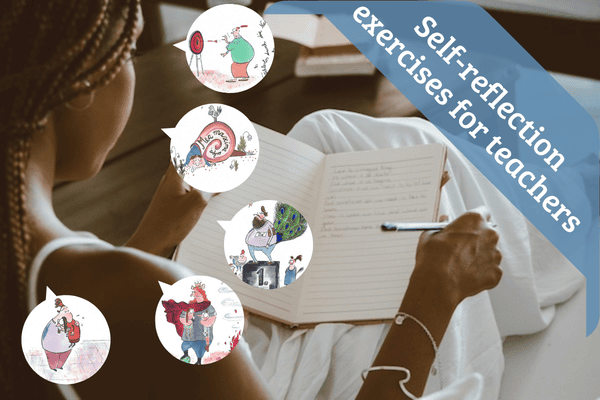
Self-reflection exercises for teachers strengthen your professional approach, reduce stress and promote clarity in your day-to-day school life. Using scientifically proven methods, you’ll learn simple steps to recognise patterns, act more mindfully and lead with greater composure – without taking up any extra time.
Self-reflection for teachers – The ultimate guide

Self-reflection is one of the most important skills for teachers today Self-reflection is one of the most important skills in the teaching profession – it determines whether you respond confidently, communicate clearly and do not let yourself be overwhelmed by expectations or pressure. You’ll find a comprehensive collection of exercises, reflection questions and academic background…


